
Damp patch on the ceiling, worse after rain
Usually a parapet joint or a cracked screed holding water against the slab edge. The patch is rarely directly under the entry point.
Rawalpindi · Islamabad
Two different problems, two different layers. We diagnose which one your roof has, quote the treatment per square foot, and put the warranty on paper before the crew climbs up.
Water almost never enters where the stain appears. It travels along the slab, down a wall cavity, and shows up metres away. Getting this wrong is why some roofs are “waterproofed” three times and still leak. Here is how we read the symptoms.
Usually a parapet joint or a cracked screed holding water against the slab edge. The patch is rarely directly under the entry point.
Often a blocked or badly sealed drain mouth, or a pipe penetration with no collar. Water tracks along the beam and drops at the weakest corner.
Rising or lateral damp, not a roof failure. Painting over it returns within one season — the moisture source has to be cut off first.
The slab is absorbing solar gain and releasing it into the rooms. That is a heat problem, not a leak — it needs a reflective or insulated layer.
Failed shower membrane or grout lines, or a leaking concealed pipe. Always treat before re-tiling — tiles hide the problem, they do not fix it.
A cracked tank lining letting groundwater in. Needs food-safe crystalline or cementitious lining, not a general roof coating.
Systems & rates
Indicative 2026 rates for Rawalpindi and Islamabad, materials and labour included. Your final figure depends on roof area, condition and access — quoted after inspection.
| System | Rate (PKR / sq ft) | Expected life | Best for |
|---|---|---|---|
| Reflective heat-proofing coating | 60 – 120 | 3 – 5 years | Heat reduction on sound roofs |
| Cementitious waterproof coating | 90 – 160 | 4 – 6 years | Low-traffic roofs, tight budgets |
| Polyurethane (PU) liquid membrane | 140 – 240 | 5 – 8 years | Complex roofs, no open flame |
| Torch-on bitumen membrane (APP/SBS) | 160 – 300 | 8 – 12 years | Most residential concrete roofs |
| PU + fibreglass reinforcement | 220 – 340 | 8 – 12 years | Heavy foot traffic, plant areas |
| Water tank crystalline lining | 180 – 300 | 10+ years | Potable and overhead tanks |
| EPS / XPS board insulation system | 200 – 500 | 15+ years | Serious heat reduction, long term |
Rates exclude structural repair, screed replacement and tile work. Those are quoted separately only when the inspection shows they're needed.
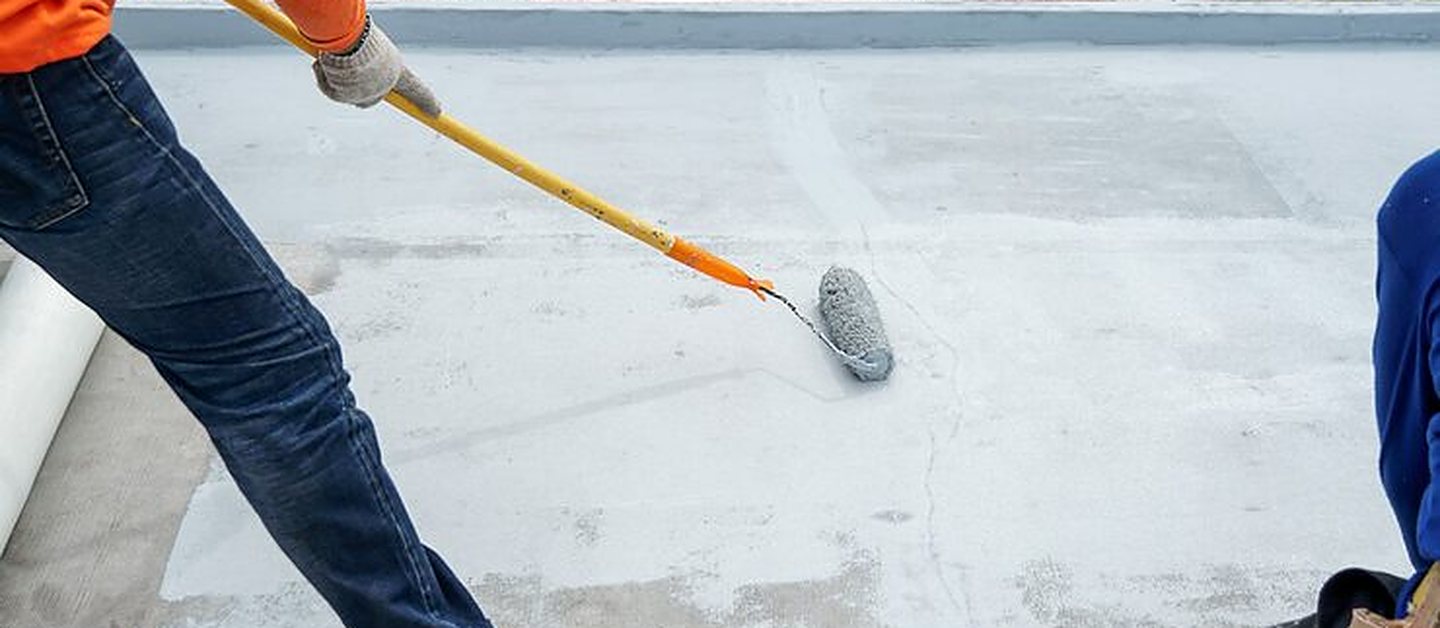
Reinforcement embedded into the first coat before the second goes down — the step most low quotes skip.
On site · RawalpindiHeat proofing
A bare concrete slab absorbs solar radiation all day and radiates it back into the room until well after sunset. Throwing another coat of white paint on it is a three-month fix. These are the options that hold.
Book a heat assessmentHigh-SRI white or light coating that bounces solar radiation back instead of absorbing it. Cheapest entry point, measurable drop in surface temperature, but needs recoating every three to five years.
A rigid board layer under a protective screed or tile bed. The most effective option for a top floor that stays hot at midnight, because it slows heat transfer rather than just reflecting it.
Sprayed-in-place foam that fills uneven surfaces and seals as it insulates. Needs a UV-protective topcoat in our climate, or it degrades within two summers.
Where the roof is also being finished, an insulated tile bed gives heat protection and a usable terrace in one build-up. Slowest and most expensive, longest life.
Before you book
Waterproofing stops water entering the slab. Heat proofing reduces how much solar heat the slab absorbs and passes into the rooms below. Different layers, different materials — and on a Rawalpindi roof you usually need both.
A reflective coating alone will not stop a leak. A membrane alone will not bring your summer room temperature down.
For most homes in Rawalpindi and Islamabad, a torch-applied APP or SBS bitumen membrane over a primed, repaired screed is the most reliable choice, at roughly 8 to 12 years. Polyurethane is better on roofs with complex details or where an open flame isn't safe. Cementitious coating suits low-traffic roofs on a tighter budget.
PU and coating systems: 24 to 48 hours before foot traffic, 5 to 7 days before tiles or heavy equipment. Membrane systems take light traffic once cooled, but a daily-use roof should get a protective screed or tile bed.
Yes. Roof work is external. We protect the approach, control dust, and keep noisy work inside daylight hours. A single roof is usually two to four working days.
Membrane needs a dry surface, so we schedule around rain rather than risk a failed bond. Cementitious and crystalline work is more forgiving. Leak repairs can be done in most weather — stopping the water first is often the right move in July, with the full overlay finished in September.
Free inspection
Send a photo on WhatsApp, or book a supervisor to walk the roof with a moisture meter. Both are free.